
What’s in a Song?


A Guide to Contemporary Music Forms
Music is everywhere. It streams from our phones, fills our cafés, scores our films, and soundtracks the most important moments of our lives. We consume it constantly, instinctively, and joyfully — often without stopping to think about how it is put together.
But just like classical music, contemporary music has its own forms, structures, and conventions. Understanding them doesn’t make music less magical. If anything, it makes you appreciate just how much craft, intention, and artistry goes into the songs and albums you love most.
Here is a guide to some of the most important forms in contemporary music today.
The Pop Song
The pop song is the most democratic and universal musical form of the modern era. In three to four minutes, a great pop song can make you cry, make you dance, make you feel less alone, or lodge itself so firmly in your brain that you’re still humming it three weeks later.
The architecture of a pop song is deceptively simple. Most are built from a handful of core components — the verse, which tells the story and moves the narrative forward; the pre-chorus, which builds tension and anticipation; the chorus, which delivers the emotional payload and the song’s central hook; and the bridge, which offers contrast, surprise, and a fresh perspective before the final chorus lands.
This structure — often written as Verse / Chorus / Verse / Chorus / Bridge / Chorus — is so deeply embedded in our listening habits that we feel its logic even when we don’t consciously recognise it. When a bridge arrives and suddenly shifts key or mood, we feel the change in our bodies before we understand it in our minds.
But great pop songs are not just about structure. They are about the hook — the melodic or lyrical idea so irresistible that it refuses to leave you. A great hook can be a chorus, a riff, a rhythm, a single repeated phrase, or even a sound. The Beatles understood this. Stevie Wonder understood this. Beyoncé understands this. And so do the best producers and songwriters working today.
The pop song’s apparent simplicity is its greatest achievement. Writing something that sounds effortless, universal, and true in under four minutes is one of the hardest things in music.
The Album
For most of the 20th century, the album was the primary artistic statement of popular music. A collection of ten to fourteen songs, gathered together with intention and care, released as a complete work — the album was where artists told their biggest stories, took their greatest risks, and asked their audiences to sit down, press play, and stay a while.
The album as a form reached its creative peak in the 1960s and 70s, when artists like The Beatles, Joni Mitchell, Marvin Gaye, David Bowie, and Pink Floyd began treating it not as a collection of singles but as a unified artistic experience. Every song had its place. Every transition was deliberate. The sequence mattered. The silences between tracks mattered. The cover art mattered.
Marvin Gaye’s What’s Going On is a landmark — a suite of songs so carefully sequenced that they flow into each other like movements of a symphony, addressing race, war, poverty, and love with devastating clarity. Joni Mitchell’s Blue is so intimate and emotionally transparent that listening to it feels like reading someone’s diary. Kendrick Lamar’s To Pimp a Butterfly brought the album’s ambitions roaring into the 21st century — a dense, layered, politically urgent work that rewards repeated listening in the way the greatest albums always have.
In the age of streaming, the album has faced real challenges. Listeners increasingly consume music song by song, playlist by playlist, rather than album by album. And yet the greatest artists of our time — Beyoncé, Taylor Swift, Frank Ocean, Billie Eilish — continue to make albums that demand to be heard as a whole. The form endures because the impulse behind it endures: the desire to say something bigger than any single song can hold.
The EP
The EP — Extended Play — sits between the single and the album. Typically four to six tracks long, it is shorter and more focused than a full album, but more substantial and considered than a single release.
For emerging artists, the EP has become one of the most important tools in building an audience. It is long enough to establish an artistic identity and show range, but short enough to be recorded and released quickly, and digestible enough that new listeners can take it in without commitment.
But the EP is not just a stepping stone to the album. In its own right, it is a form with distinct qualities — focused, urgent, and often more revealing of an artist’s true voice than a full album, where commercial pressures and the demands of sequencing can sometimes dilute the work. Some of the most compelling music of recent years has arrived in EP form — raw, direct, and uncompromising in a way that albums sometimes are not.
The Single
The single is the oldest and most immediate form in popular music — one song, released on its own, designed to reach as many ears as possible as quickly as possible.
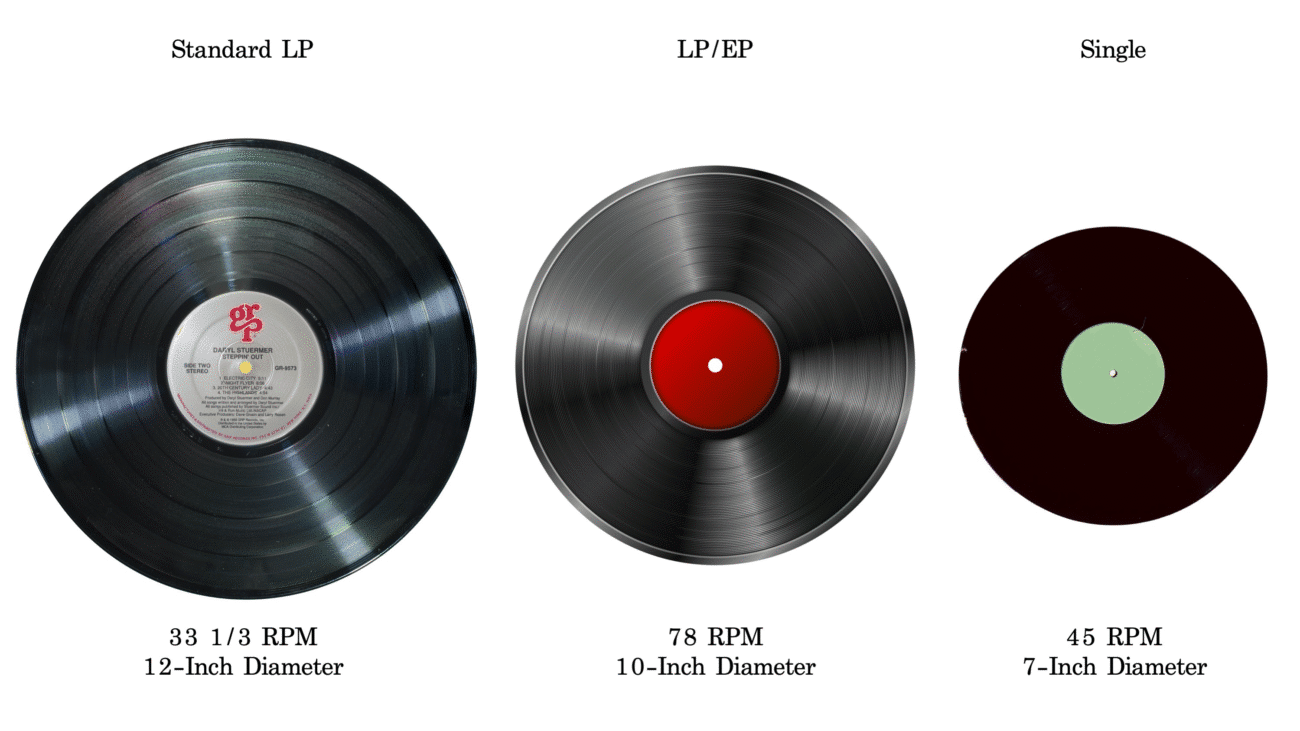
In the era of vinyl, singles were physical objects — seven-inch records with an A-side and a B-side, sold in record shops, played on jukeboxes, and spun by radio DJs. The B-side was often where artists hid their most experimental or personal work, safe from commercial pressure. Some of the most beloved songs in history started life as B-sides.
In the streaming era, the single has evolved but its essential purpose remains the same — to introduce an artist, to mark a moment, to deliver a concentrated dose of musical feeling in the most direct way possible. A great single doesn’t need an album to justify it. It stands entirely on its own.
The Concept Album
The concept album is the album’s most ambitious incarnation — a collection of songs unified by a single overarching story, theme, or idea that runs through the entire work.
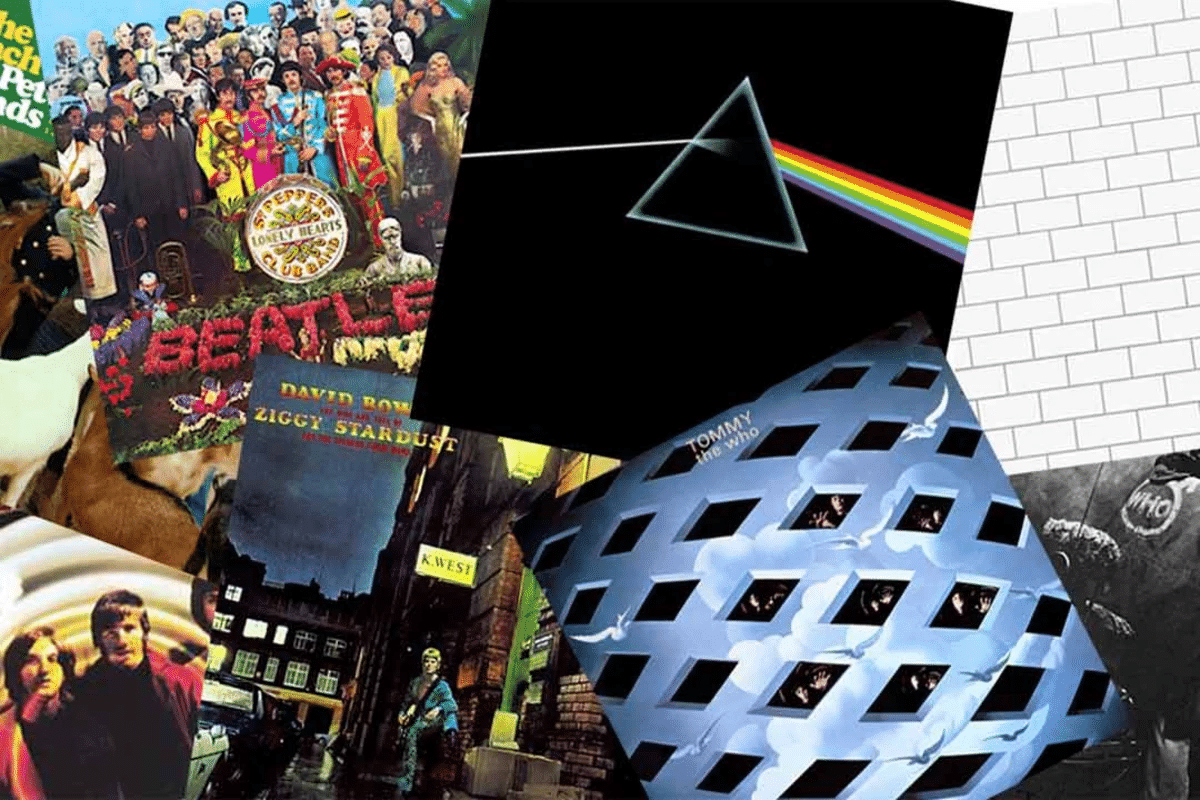
The form emerged in the late 1960s, when artists began pushing against the commercial constraints of pop music and asking bigger questions. The Beatles’ Sgt. Pepper’s Lonely Hearts Club Band is often cited as the first true concept album — a record built around the conceit of a fictional band performing a show, though its concept is loose enough that the music itself remains the real story.
Pink Floyd took the concept album to its outer limits with The Wall — a sprawling, theatrical double album about isolation, trauma, and the walls we build around ourselves, which spawned a live show and a film, and remains one of the most ambitious artistic projects in the history of rock music.
In more recent years, Beyoncé’s Lemonade — a visual album exploring infidelity, grief, Black womanhood, and redemption — and Taylor Swift’s folklore and evermore — sister albums built around a shared world of fictional characters and interconnected narratives — have shown that the concept album is very much alive. The impulse to tell a bigger story than any single song can contain is as strong as ever.
The Beat and the Producer Track
One of the most significant shifts in contemporary music over the last thirty years has been the rise of the producer as a primary creative force — and with it, the emergence of the beat as a distinct musical form in its own right.
A beat, in its simplest definition, is an instrumental track — a rhythmic and harmonic foundation built by a producer, over which a vocalist or rapper performs. But in the hands of the greatest producers, a beat is far more than a backing track. It is a complete sonic world — layered with samples, synthesisers, drum programming, melody, and atmosphere — that has its own emotional identity before a single word is sung.
Producers like Quincy Jones, J Dilla, Pharrell Williams, Metro Boomin, and Billie Eilish’s brother and collaborator Finneas have shaped the sound of popular music as profoundly as any vocalist or songwriter. The producer track — an instrumental work released in its own right, without vocals — has become a celebrated form in electronic music, hip-hop, and lo-fi, listened to for its own beauty and completeness.
The Remix
The remix is one of contemporary music’s most creative and misunderstood forms. At its most superficial, a remix is simply an alternate version of an existing song — sped up, slowed down, with a different beat underneath. But at its most inspired, a remix is an act of genuine artistic reinterpretation.
The remix emerged from the DJ culture of 1970s New York and Jamaica, where DJs would extend the instrumental breaks of songs to keep dancefloors moving — and discovered in doing so that they could transform the emotional character of a piece of music entirely. A slow, melancholy song could become euphoric. A pop song could become a meditation. A dance track could become something cinematic and strange.
The greatest remixes don’t just alter a song — they reveal something new in it, something that was always there but that only becomes visible when seen from a different angle. In that sense, the remix is not so different from what jazz musicians have always done with a standard, or what classical performers do with a great score — finding the music inside the music.
The Soundtrack and the Score
Film music is one of the most widely heard and least consciously appreciated forms of contemporary music. We absorb it in cinemas, on streaming platforms, and in our living rooms — often without registering that what we are hearing is music at all, so perfectly does it serve the images it accompanies.
But the great film scores are complete musical works in their own right. Bernard Herrmann’s score for Psycho, Ennio Morricone’s music for The Good, the Bad and the Ugly, John Williams’ themes for Star Wars and Schindler’s List, Hans Zimmer’s score for Inception, and Jonny Greenwood’s work for Paul Thomas Anderson’s films — these are not merely functional accompaniments to cinema. They are profound artistic achievements that stand entirely on their own terms.
The rise of the soundtrack album — a curated collection of existing songs chosen to accompany a film or television series — has created its own distinct form. A great soundtrack album, like the one assembled by Kendrick Lamar for Black Panther, or the Guardians of the Galaxy series’ Awesome Mix tapes, tells its own story through the sequence and juxtaposition of songs, independent of the film it accompanies.
The Mashup
The mashup is the most playful and subversive form in contemporary music — the art of combining two or more existing pieces of music into a single new work, finding unexpected harmonies, rhythmic alignments, and emotional resonances between songs that were never designed to coexist.
At its most basic, a mashup is a party trick — a novelty that gets a laugh of recognition from an audience when two familiar songs unexpectedly click together. But at its most sophisticated, a mashup can be genuinely revelatory — exposing a melodic or harmonic connection between two pieces of music that makes you hear both of them differently forever after.
The mashup is also a provocation — a challenge to our assumptions about genre, era, and artistic identity. When a producer places a Beethoven melody over a hip-hop beat and it works perfectly, it raises a question worth sitting with: what exactly is the difference between these two pieces of music? Less than we thought, perhaps.
Why Contemporary Forms Matter
We sometimes make the mistake of treating contemporary music as something that simply happens — a product of culture and commerce rather than a tradition of artistic craft and intentionality. But every form in this guide has its own history, its own conventions, and its own possibilities — and the artists who work within these forms at the highest level are as deeply skilled, as thoughtfully intentional, and as genuinely creative as any composer who ever lived.
The producer who spends three weeks perfecting the atmosphere of a single beat is as devoted to their craft as the pianist who spends three years mastering a Beethoven sonata. The songwriter who distils a complex emotional truth into a three-minute pop song is exercising a discipline as rigorous as any poet. The DJ who reads a dancefloor and shapes a four-hour set into a single emotional arc is practising a form of live composition.
Music is music. The forms change. The craft endures.