
Straight to the Heart: Reflections on Julius Asal’s “Last Words” Singapore Recital

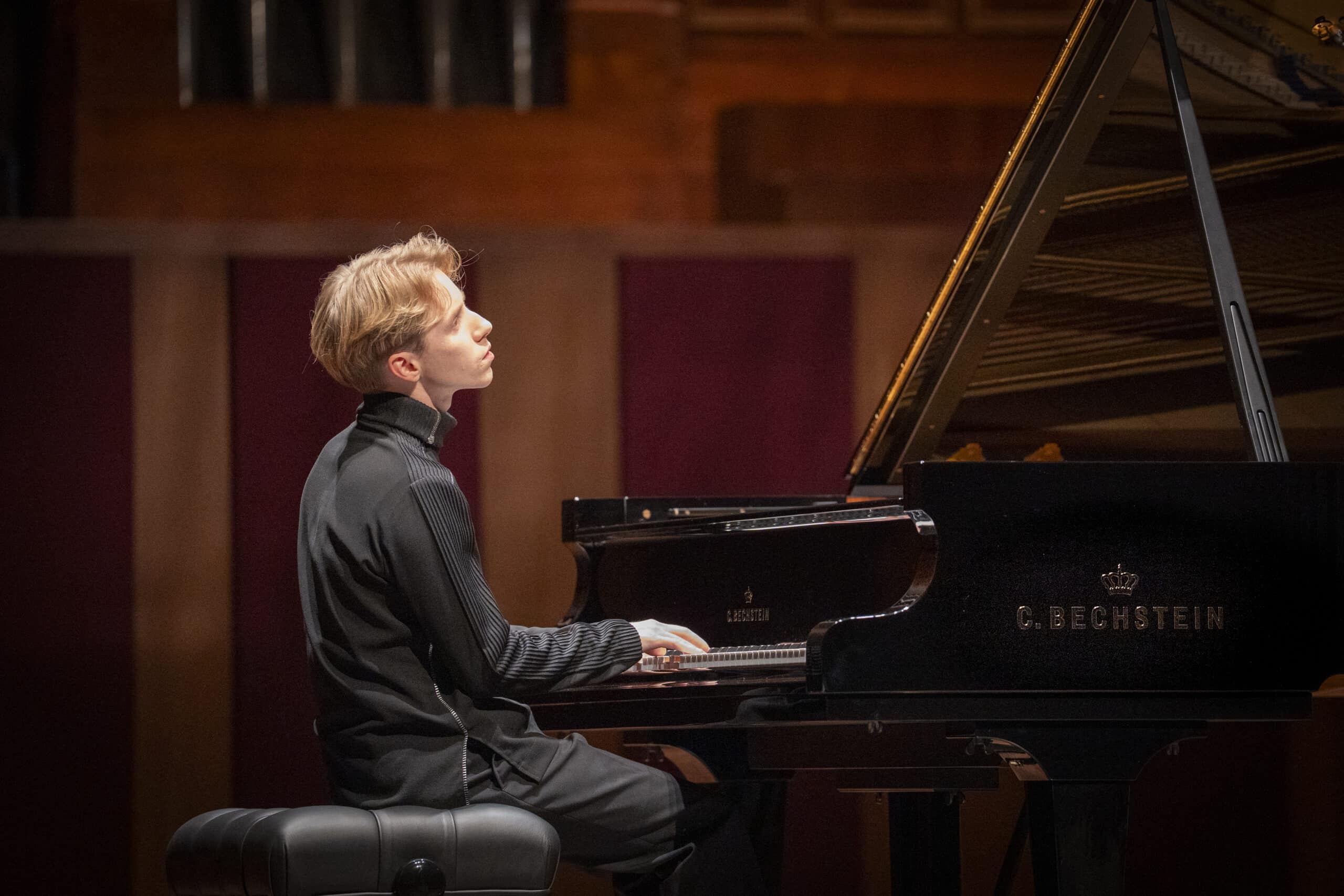
There are recitals that impress through virtuosity, and others that stay with us for what lingers when they’re over. German pianist Julius Asal’s Singapore debut, Last Words: Ghosts • Farewells • Love • Eternity, at the Victoria Concert Hall on 11 November 2026, belonged firmly to the latter.
Thoughtfully curated around what composers seek to express when words do not suffice, the programme brought together four works shaped by different lives and forms of longing, loss, and farewell. From Robert Schumann’s Ghost Variations and Beethoven’s final piano sonata to Lera Auerbach’s Love Letters of Emma Hauck and Sergei Prokofiev’s Romeo and Juliet, this recital moved through deeply personal territory. It was an emotionally demanding programme, yet one that felt carefully considered from beginning to end.
Perhaps the best way to understand Asal’s musicianship lies in a phrase he once used when referring to Schumann’s Ghost Variations: “Es geht direkt ins Herz” — it goes straight to the heart. After experiencing his playing, those words seem particularly fitting. There is a distinctive power in Asal’s approach, one that rarely needs to announce itself through grand gestures or sheer volume. Instead, it works quietly beneath the surface, taking root before gradually revealing its emotional force. He can roar and soothe at the same time, with an almost imperceptible undercurrent of intensity running beneath the gentlest passages.
Before beginning, Asal took a moment to thank the audience and offer a few introductions to the music he had prepared. He also made the thoughtful decision to perform Schumann’s Ghost Variations and Beethoven’s Sonata Op. 111 attacca—without interruption. Although written decades apart, Asal felt a kinship between the two works, allowing them to unfold as one continuous musical experience. The pairing made for a compelling opening, drawing the audience from Schumann’s fragile, inward world into the expansive, searching landscape of Beethoven’s final sonata.
That intimacy was especially apparent in Schumann’s Ghost Variations. Written in the final years of the composer’s life, its theme unfolds through five variations, each bringing subtle shifts to the musical material before arriving at a final, restrained statement. There is little in the way of overt drama; much of its poignancy lies in what remains unspoken. Asal approached the work with remarkable clarity and sensitivity, allowing its fragile character to emerge without imposing unnecessary weight upon it.
From there, Asal moved seamlessly into Beethoven’s Piano Sonata No. 32 in C minor, Op. 111. Spanning two contrasting movements, the work moves between earthly struggle and a more expansive, almost otherworldly state of being. Its opening movement is charged with tension and urgency, while the Arietta gradually opens into a series of increasingly intricate variations. In Asal’s hands, the musical development felt purposeful and organic, with each shift in texture and dynamic carefully shaped.
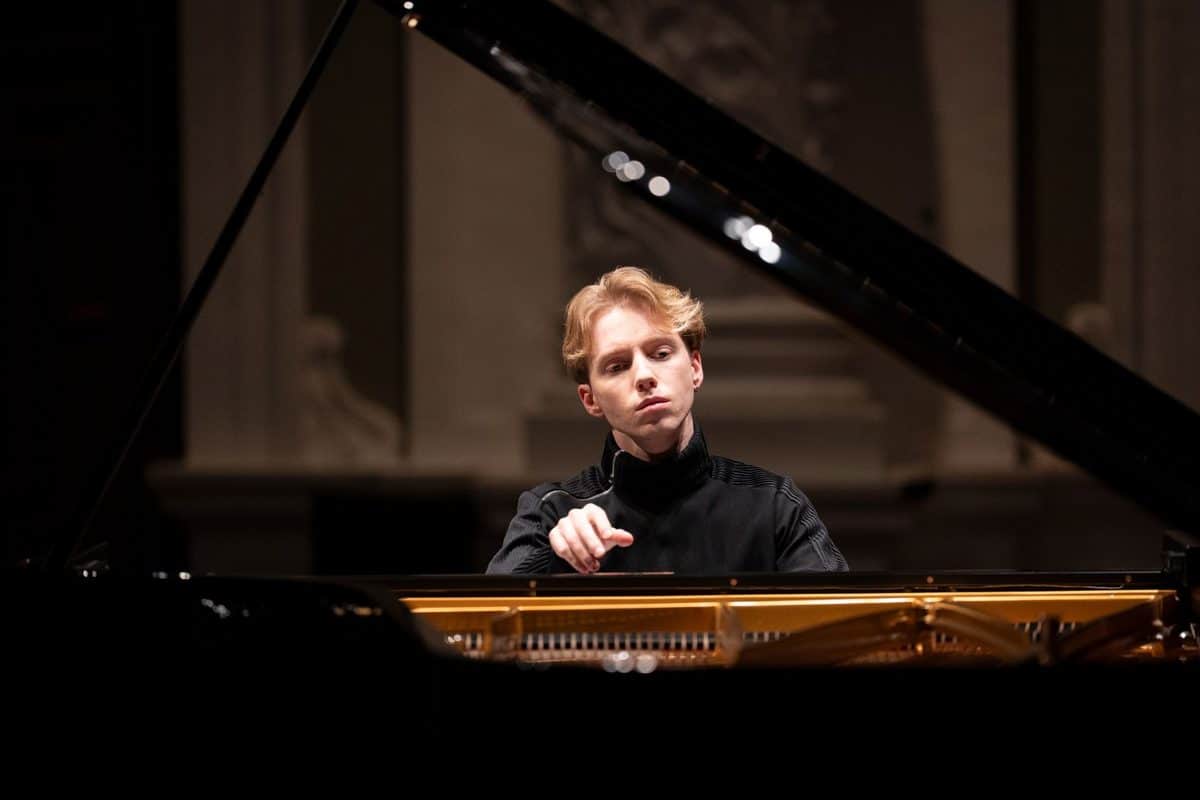
The emotional centre of the evening, however, came with Lera Auerbach’s Liebesbriefe von Emma Hauck (Love Letters of Emma Hauck), receiving its Singapore premiere. Before playing, Asal shared that he views the work not merely as a piece of music, but as an overarching piece of art and an immersive experience. Inspired by Emma Hauck, a German woman admitted to a psychiatric institution in 1909, the work draws on the letters she repeatedly wrote to her husband while trying to fight her inner demons—a battle that ultimately cost her her life. Across the pages, the same desperate plea appeared thousands of times. Quoting Asal, “In German we say, “Herzensschatzi, komm”, in English we say “Darling, please come back to me.” ”. The letters were never delivered, read only by her doctors.
Rather than recreate these letters literally, Auerbach responds to the emotional weight behind them: the longing, the obsessive repetition, and the painful distance between the writer and the person she hopes will return. The work brings us into contact with a life marked by profound vulnerability, giving expression to words that were never heard by their intended recipient. In the context of Last Words, it deepens the programme’s central idea: some stories remain unfinished, and some voices risk disappearing with time. Here, art becomes a way of listening to one that might otherwise have been lost.
A different kind of storytelling ensued in the second half, with selections from Prokofiev’s Romeo and Juliet. Moving from the introspective world of the preceding works into the drama of Shakespeare’s tragedy, the music brought a striking range of characters to the piano. The selection included both Prokofiev’s own piano transcriptions and new arrangements by Asal, offering a glimpse of his imagination beyond interpretation alone.
The lyrical intimacy of Madrigal and Romeo with Juliet Before Parting sat alongside the darker characterisation of Tybalt Recognizes Romeo and the imposing force of Dance of the Knights. Yet what made this segment especially memorable was the sheer physicality of Asal’s sound. There is something striking about the contrast between Asal’s slight, lean frame and the immense intensity he commands at the keyboard. His playing can be remarkably forceful, yet never feels heavy-handed, demonstrating that musical power has little to do with physical stature, originating instead from somewhere far more intangible.
Even from the front of the hall, where sound may tend to travel over and above the first few rows, there was a remarkable acoustic intimacy to the performance. Rather than projecting at the audience, the sound seemed to gather in the space around the instrument and draw the listener in. The air around the C. Bechstein D 282 concert grand felt charged, as though every resonance could be felt moving through the room. Drawing an extraordinary range of colour from the instrument, Asal made the piano feel orchestral in its scope without ever sacrificing the clarity of individual lines.
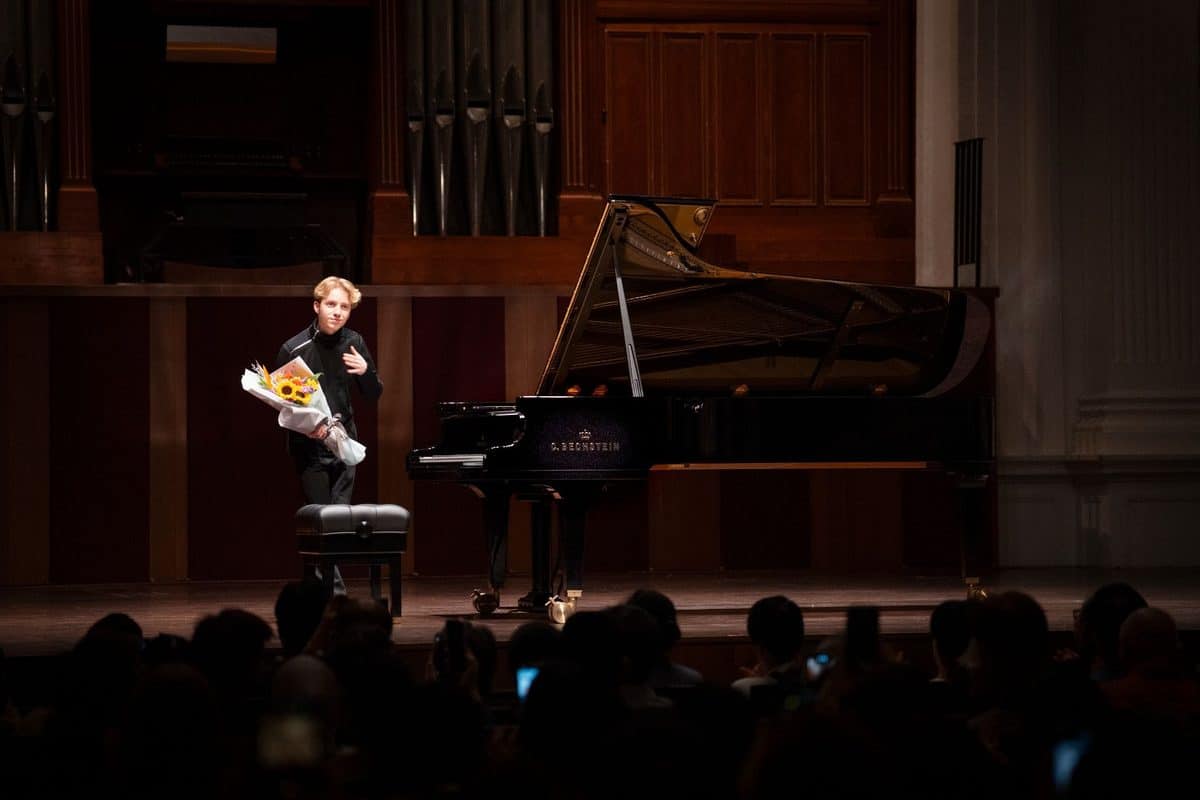
After such an intense programme, two encores offered a welcome change of atmosphere. Moszkowski’s Étude in A-flat Major brought a lighter, sparkling touch, followed by Schumann’s Von fremden Ländern und Menschen, a gentle and familiar close. They were thoughtful choices, allowing the audience to leave the hall with a sense of breathing space after the emotional weight of the preceding works.
There is something deeply human about the idea behind Last Words. It brings to mind the spirit of Día de los Muertos, the Mexican tradition in which families remember and celebrate those who have passed, keeping their presence alive through stories and memory. In a different context, Asal’s programme does something similar. Through these works, he draws attention not only to the composers, but to the people and experiences behind the music—lives shaped by love, longing, illness, and loss.
What makes this act of remembrance so affecting is that it is never presented as spectacle. There is no attempt to romanticise suffering or turn tragedy into grand gestures. Instead, there is a quiet acknowledgement of these lives and their unfinished stories, creating a space in which to sit with them, to listen, and perhaps to grieve alongside them. A reminder that Music can do more than preserve the past; it can give us a way to reconnect with the people who lived it.
Julius Asal’s artistry is well worth experiencing. His playing possesses a combination of restraint and intensity, drawing the listener in rather than demanding attention. In a recital built around the things we leave behind, perhaps that is what lingers most: not simply the memory of the music, but the people and emotions it has allowed us to remember.