Rockschool vs RSL Classical: Which Music Exam Pathway Is Right for You?

Rockschool vs RSL Classical: Which Music Exam Pathway Is Right for You?
Comparing Rockschool and RSL Classical music exam pathways at RSL Event Centre Singapore (RSEC). Learn key differences, instrument coverage, and exam weightages.
Two Syllabi, One Accredited Framework
For music candidates, parents, and private music educators across Singapore, RSL Awards (formerly Rockschool) offers two distinct exam families under a single accredited framework: Rockschool and RSL Classical.
Whether your candidate is preparing for a face-to-face assessment at the RSL Event Centre Singapore (RSEC) near Old Airport Road / Kallang or preparing a digital submission, both pathways award fully equivalent, globally recognized qualifications (including UCAS points for UK higher education at Grades 6–8).
However, their underlying pedagogical approaches assess musicality through very different lenses. Here is an official breakdown to help candidates and teachers choose the ideal exam route.
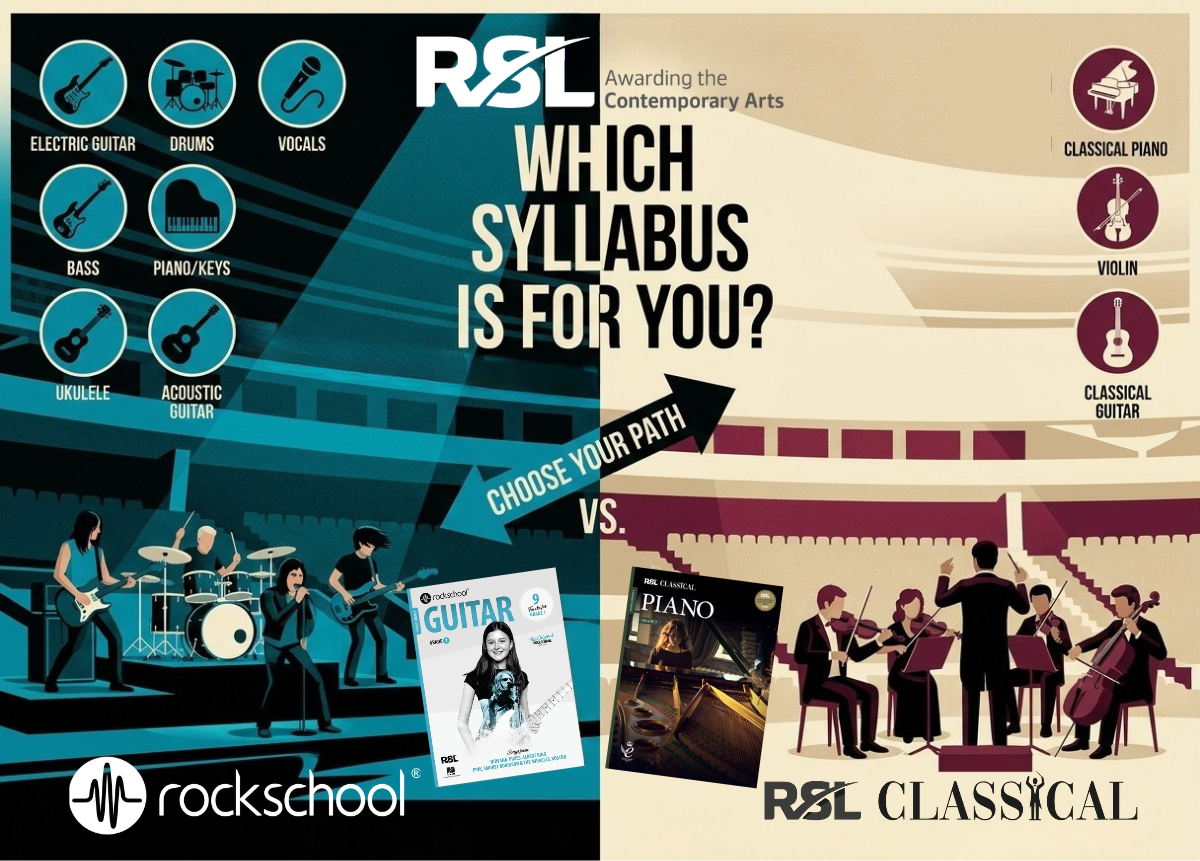
1. Rockschool: The Contemporary & Session Musician Pathway
Pioneered in 1991, Rockschool was designed to evaluate modern performance styles. Rather than focusing exclusively on traditional notation reading, it measures a candidate’s groove, timing, improvisation, and ensemble readiness.
- Repertoire & Styles: Pop, rock, funk, jazz, metal, and R&B. Features original commissioned tracks alongside official arrangements of global hits (from classic rock legends to modern pop chart-toppers).
- Core Competencies: Lead sheet reading, click-track accuracy, backing track integration, improvising over chord progressions, and modern tone/instrument control.
- Available Syllabi: Piano, Digital Keyboard, Drums, Electric Guitar, Acoustic Guitar, Bass Guitar, Ukulele, and Vocals.
Recommended for candidates who:
- Aim to play in bands, perform contemporary covers, or pursue music production and songwriting.
- Are taking exams in intrinsically modern instruments (Drums, Electric Guitar, Bass, Ukulele).
- Thrive on ear training, rhythmic improvisation, and structured backing track integration.
2. RSL Classical: Classical Rigor with a Modern Outlook
RSL Classical provides a flexible, contemporary alternative to traditional classical exam boards. It maintains the core technical rigor of classical study—tone quality, sight-reading precision, and dynamic control—while expanding repertoire to reflect modern compositions.
- Repertoire & Styles: Core classical masterworks (Bach, Mozart, Chopin) alongside film/game scores, modern classical compositions, and works by a diverse range of global composers.
- Core Competencies: Accurate sight-reading, subtle dynamic shading, tone coloration, classical technique, and unassisted solo acoustic delivery.
- Available Syllabi: Classical Piano, Classical Guitar, and Violin.
Recommended for candidates who:
- Specialize in acoustic/orchestral instruments and traditional repertoire.
- Prefer fully notated, structured scores over open improvisational sections.
- Desire a rigorous classical benchmark with modern, flexible exam delivery options.
Side-by-Side Breakdown: Component Weightages
Both pathways are evaluated out of 100 total marks (Pass: 60 | Merit: 74 | Distinction: 85), but component weightages highlight their distinct testing priorities:
| Exam Component | Rockschool (Contemporary) | RSL Classical |
| Performance Pieces | 60 Marks (3 pieces × 20 marks; played with backing tracks) | 60 Marks (3 pieces × 20 marks; solo performance) |
| Technical Exercises | 15 Marks (Scales, arpeggios, chord voicings, rhythmic riffs) | 15 Marks (Scales, arpeggios, technical studies, tone exercises) |
| Sight-Reading or Improv | 10 Marks (Choice between Sight-Reading OR Improvisation & Interpretation) | 10 Marks (Sight-Reading) |
| Ear Tests | 10 Marks (Melodic & Rhythmic recall; playing back by ear) | 10 Marks (Melodic & Rhythmic recall; playing back by ear) |
| General Musicianship | 5 Marks (Questions on piece structure, music theory, & gear/tech) | 5 Marks (Questions on musical terms, style, & historical context) |
Examiner Note: A key feature of the Rockschool pathway is the option to select Improvisation & Interpretation in place of traditional Sight-Reading starting from the lower grades. RSL Classical maintains sight-reading as a mandatory requirement.
Choosing the Right Path: Guidance for Teachers & Parents
- Instrument Alignment: Drums, Bass, Electric Guitar, and Ukulele are strictly within the Rockschool syllabus. Violin sits within RSL Classical. Piano and Acoustic Guitar candidates can choose either path depending on their preferred repertoire.
- Performance Style: Rockschool exams evaluate how well a musician locks into a band setting using backing tracks. RSL Classical evaluates solo acoustic projection and expressive phrasing.
- Practice Motivation: Candidates progress fastest when connected to their material. Repertoire preference should be the primary deciding factor.
Digital Practice Tools & Venue Preparation
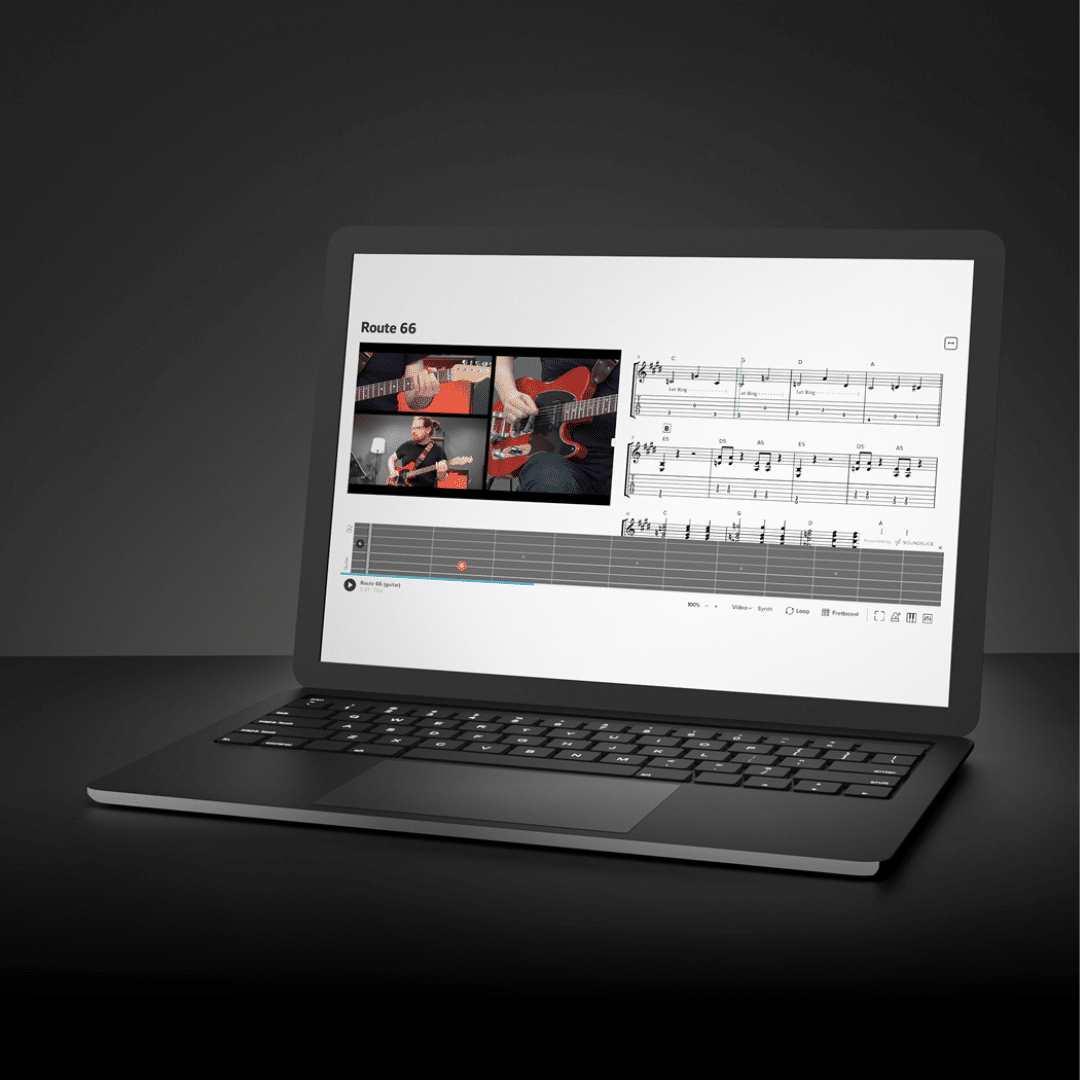
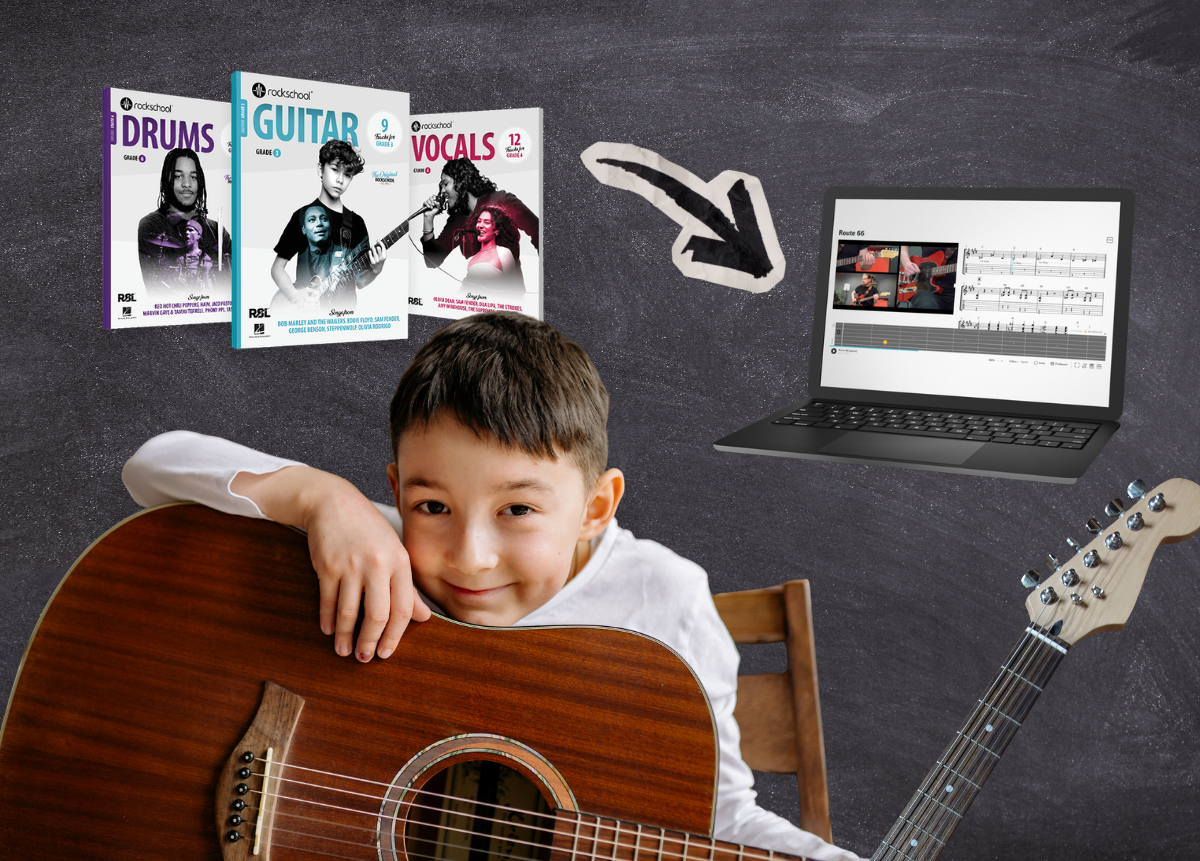
Regardless of the selected pathway, candidates can utilize the RSL RiFF platform (included with RSL Exam e-Books) to streamline their preparation:
- Practice along with official backing tracks featuring tempo adjustment.
- Utilize score-following tools for targeted section repetition.
- Access Exam Mode to replicate timing conditions before test day.
Exam Facilities at RSL Event Centre Singapore
For candidates taking face-to-face assessments, RSEC provides purpose-built examination rooms equipped with accredited instruments (including acoustic/digital pianos, modern drum setups, and sound equipment) designed to meet RSL Awards international testing standards.
For venue inquiries, exam registration schedules, or syllabus resources, visit the official Rhttps://rs-event.sg/SL Event Centre Singapore portal or speak with your registered RSL music instructor.