European Sound Pianos in Singapore? Here’s Where to Find Them.

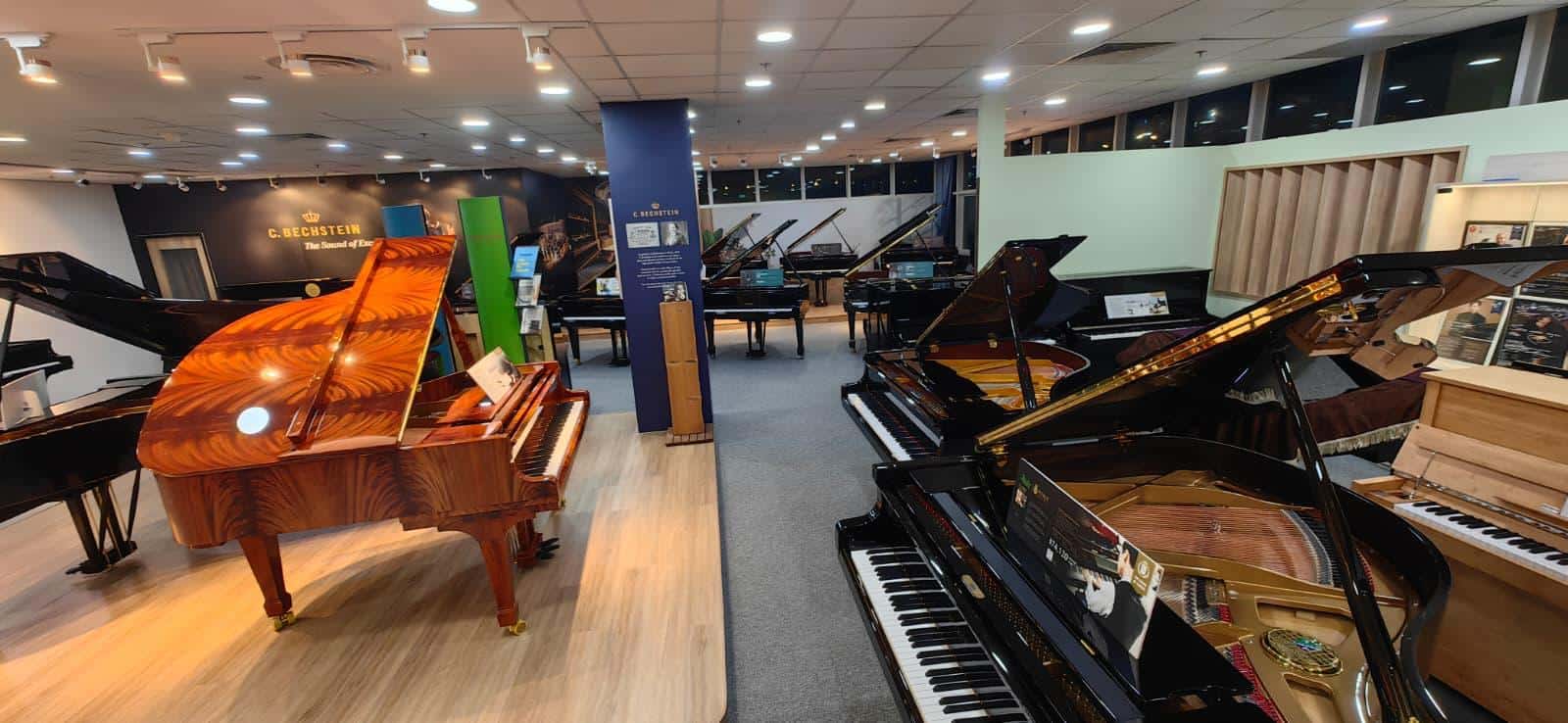
Ask a group of pianists what they love about a European piano, and the same words tend to come up: warmth, depth, a singing tone. For many players, that character is what makes practice feel less like a task and more like a conversation with the instrument.
If you’re beginning to look for a piano, whether for a child’s first lessons, an adult returning to music, or a family home, the term “European-style” appears often. This guide explains what it means, which names are worth knowing, and where to try these pianos in Singapore.
What Does “European-Style” Mean?
The phrase generally refers to piano design and tonal philosophy rooted in European piano-making traditions, particularly those of Germany and Central Europe. Players often describe the resulting sound as warm and rounded, with a clear, singing treble and a touch that responds sensitively to how softly or firmly you play.
It’s worth knowing that “European-style” and “made in Europe” are not always the same thing. Some pianos are built in Europe, while others are designed by European makers or engineers and produced elsewhere, often at more accessible prices. Neither approach is automatically better. What matters is knowing what you’re buying, and how it sounds and feels to you.
A Few Names Worth Knowing
European piano-making has a long list of respected names, and hearing a few of them side by side is the quickest way to understand the range on offer.
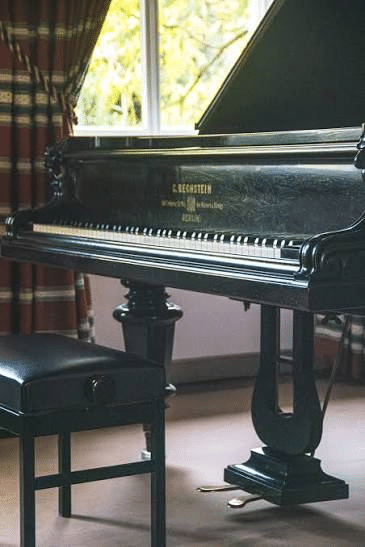
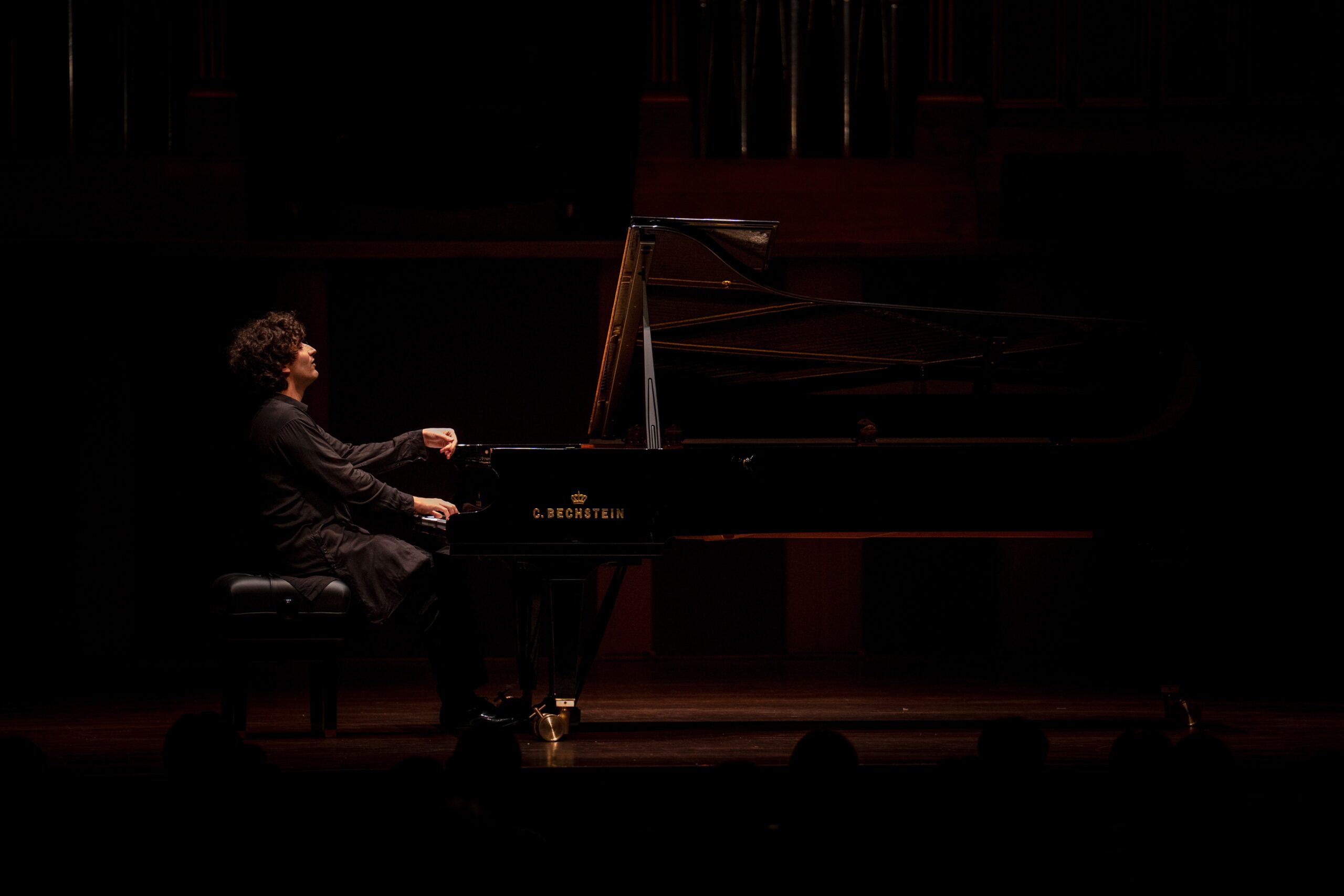
- C. Bechstein was founded in Berlin in 1853 by Carl Bechstein and is among the most celebrated names in German piano-making, long associated with concert halls and great pianists.
- W. Hoffmann is part of the Bechstein group, with Bechstein engineers overseeing its production, and is often mentioned by buyers seeking a European-designed piano at a more accessible price.
- Petrof, founded in 1864 in Hradec Králové in the Czech Republic, is one of Europe’s best-known piano makers, with a tone often described as warm and expressive.
- Rösler is a Petrof family brand with Czech origins dating back to 1878. Today its pianos are designed by Petrof and produced in Asia under Petrof’s supervision.
- Seiler was founded in 1849 in Liegnitz, Silesia (today Legnica, Poland), and is known for its transparent tone and distinctive soundboard technology. The Johannes Seiler line carries the name into more accessible price points.
- Ritmüller is a name that dates back to Göttingen, Germany, in 1795. Today it is the premium line of Pearl River, developed with European piano designers.
- Pearl River, one of the world’s largest piano makers, offers European-influenced designs such as the EU122, a popular choice for beginners and exam students.
These are only a starting point, and the best way to understand the differences is to play them.
What to Look For When You Visit a Showroom
- Play, don’t just look. Try soft passages, loud passages, and fast repeated notes. A good piano should respond evenly across all of them.
- Listen across the whole keyboard. Check that the bass sounds full and the treble clear, with no notes that feel noticeably weaker or harsher.
- Compare side by side. Hearing two or three pianos in the same room makes differences much easier to notice.
- Ask about warranty and after-sales care. Singapore’s humidity affects pianos, so ask about tuning and servicing.
- Think about the player. A beginner, an exam student and an advanced adult player may each prefer a different instrument.
Where to Try European-Style Pianos in Singapore
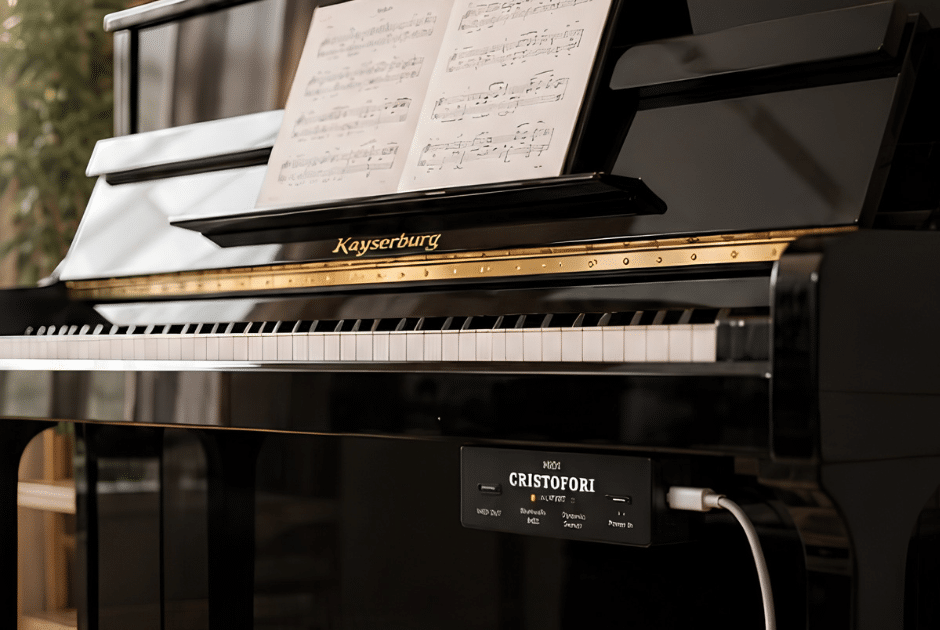
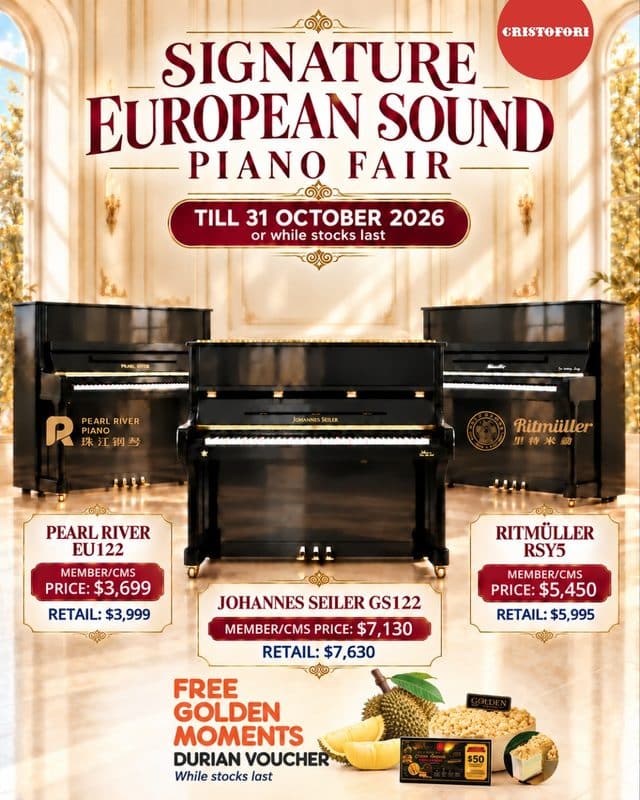
Several piano retailers across Singapore stock European and European-style instruments, and visiting more than one is a good idea. One option is Cristofori Music, a Singapore piano retailer with showrooms across the island. Their Signature European Sound Piano Fair is running now until 31 October 2026 and features the Johannes Seiler GS122, Ritmüller RSY5 and Pearl River EU122, so you can compare all three in person. See the fair details and showroom locations.
A Piano for the Long Run
Choosing a piano is a long-term decision. Whichever instrument you choose, the best one is the one that makes you want to sit down and play. Take your time, bring your teacher or a musical friend if you can, and listen carefully.
Preparing for an RSL exam? Explore our exam syllabuses and preparation resources.