A Beginner’s Guide to Classical Music Forms

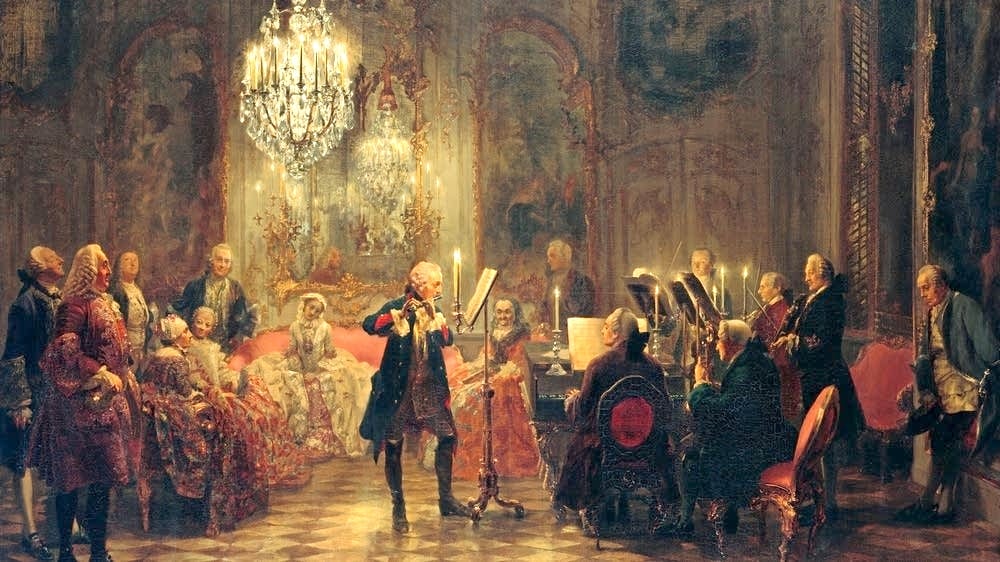
If you’ve ever sat down to listen to a piece of classical music and wondered why some pieces feel like grand journeys while others feel like intimate conversations — the answer often lies in the form the composer chose to work in.
Musical forms are the architectural blueprints of classical music. Just as a building needs structure to stand, a piece of music needs form to hold together. Understanding these forms doesn’t just make you a more informed listener — it opens up a whole new way of hearing music that you may have been enjoying for years without quite knowing why.
Here’s a guide to some of the most important and beloved forms in classical music.
The Sonata
The sonata is one of the most important and enduring forms in all of classical music. The word comes from the Italian sonare — to sound — as opposed to cantata, which comes from cantare, to sing. A sonata is essentially a piece meant to be played, not sung.
In its most common form, a classical sonata is written for one or two instruments — most often a solo piano, or a piano paired with a violin, cello, or another instrument. It typically has three or four movements, each with its own character and tempo. A fast opening movement, a slow and lyrical middle movement, and a lively, energetic finale are the most common pattern.
But what makes the sonata truly fascinating is the internal structure of its first movement — what musicians call sonata form. This is a three-part architecture built on the idea of tension and resolution. The composer introduces two contrasting musical themes in the exposition, develops and transforms them in the development section, and then brings them back home in the recapitulation. It is, in a sense, a musical argument — one that always finds its way to a conclusion.
Haydn, Mozart, Beethoven, and Schubert all wrote dozens of sonatas, and between them they defined what the form could achieve. Beethoven in particular pushed the sonata to its emotional and technical limits — his 32 piano sonatas are considered one of the greatest bodies of work in all of Western music.
The Symphony
If the sonata is a conversation, the symphony is a public speech — grand, expansive, and designed to fill a concert hall with sound.
A symphony is essentially a sonata for orchestra. It follows a similar multi-movement structure — typically four movements in the Classical and Romantic periods — but the forces involved are vastly larger. Strings, woodwinds, brass, and percussion all come together under the direction of a conductor to create something that no single instrument could achieve alone.
The symphony as we know it was largely shaped by Joseph Haydn, who wrote an astonishing 104 of them and is rightly called the Father of the Symphony. Wolfgang Amadeus Mozart wrote 41, and Ludwig van Beethoven wrote only 9 — but those 9 changed music forever. His Fifth Symphony, with its famous four-note opening motif, is perhaps the most recognisable piece of orchestral music ever written. His Ninth, completed when he was completely deaf, introduced a full choir into the final movement and remains one of the most staggering achievements in the history of human creativity.
In the Romantic era, composers like Brahms, Tchaikovsky, Dvorak, and Mahler expanded the symphony further still — in length, in emotional scope, and in sheer orchestral scale. Mahler’s Eighth Symphony requires over a thousand performers and is known simply as the Symphony of a Thousand.
The Concerto
The concerto is built on one of the most compelling dramatic ideas in all of music — the individual against the collective.
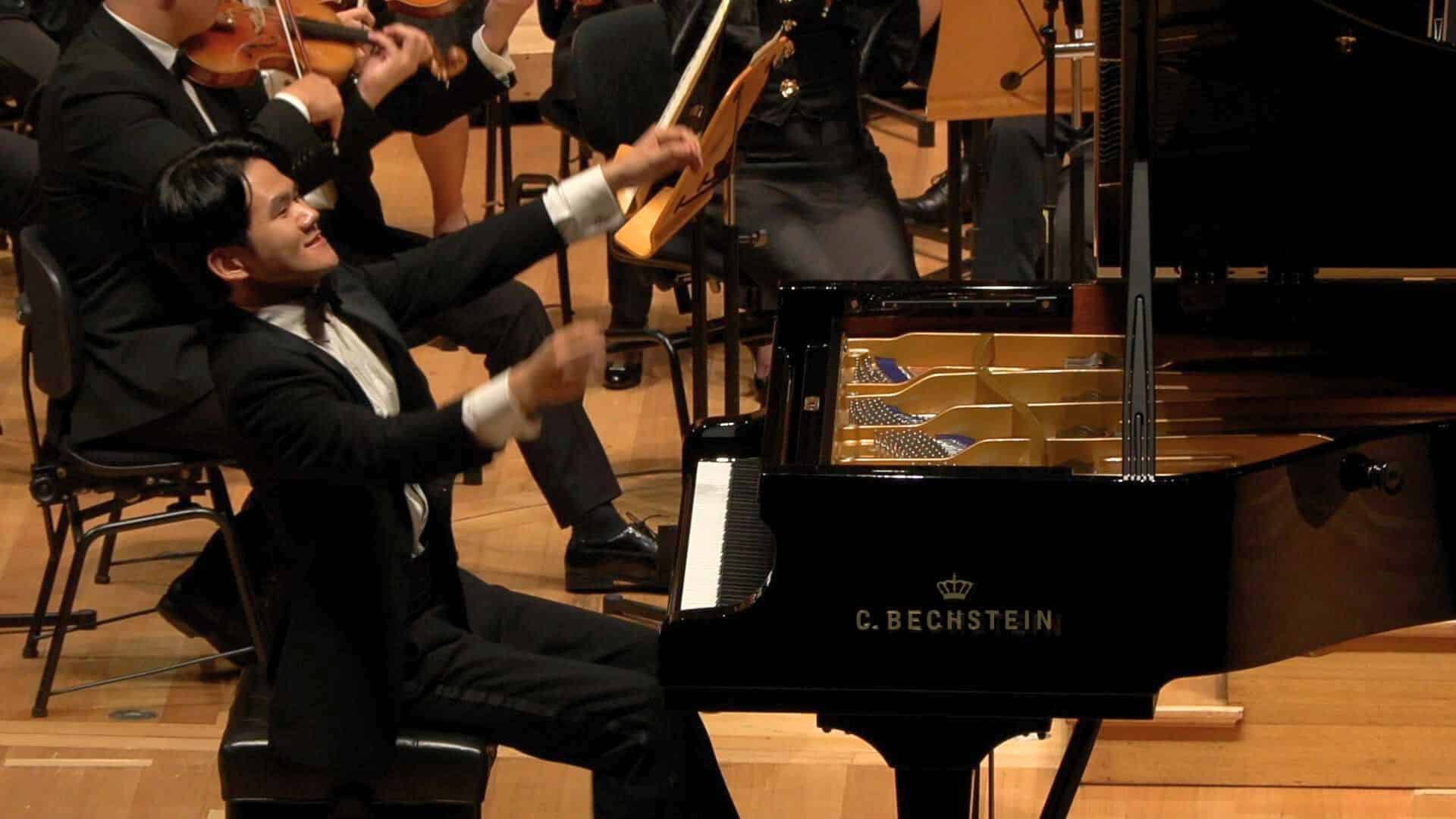
In a concerto, a solo instrument — most often a piano, violin, or cello — is placed in dialogue with a full orchestra. The soloist and the orchestra take turns, challenge each other, support each other, and ultimately come together. It is a relationship that can feel like a conversation, a competition, or a collaboration, depending on the composer’s intentions.
Like the symphony, the concerto typically has three movements — fast, slow, fast — and most classical and Romantic concertos include a cadenza, a moment near the end of the first movement where the orchestra falls silent and the soloist performs alone, often improvising or elaborating on the themes of the piece. It is the concerto’s most theatrical moment, and one of the most exciting in all of live classical performance.
The concerto form was refined by Vivaldi, perfected by Mozart — who wrote 27 piano concertos alone — and dramatically expanded by Beethoven, Brahms, Tchaikovsky, and Rachmaninoff. Rachmaninoff’s Second and Third Piano Concertos remain among the most technically demanding and emotionally overwhelming works in the repertoire.
The Suite
Long before the symphony and the concerto became the dominant forms of orchestral music, composers wrote suites — collections of dance movements gathered into a single work.
The Baroque suite typically brought together a sequence of stylised dances from across Europe — the German Allemande, the French Courante, the Spanish Sarabande, and the British Gigue, among others. Each dance had its own character, rhythm, and tempo, and together they formed a satisfying and varied whole.
Johann Sebastian Bach elevated the suite to an art form. His six Cello Suites and six French Suites for keyboard are among the most performed and recorded works in classical music. Later composers borrowed and expanded the idea — Tchaikovsky’s Nutcracker Suite brought the ballet suite into the mainstream, and Grieg’s Peer Gynt Suite showed how orchestral suites could tell stories and paint pictures with sound.
The Prelude
Originally, a prelude was exactly what the name suggests — an introductory piece played before something else. Organists and lutenists would improvise preludes before performing a larger work, warming up both their fingers and their audience.
But over time, the prelude evolved into a standalone form in its own right. Frédéric Chopin wrote 24 Preludes for solo piano — one in each major and minor key — that are among the most intimate and searching pieces he ever composed. They are not introductions to anything. They are complete worlds unto themselves, compressed into just a few minutes each.
Debussy’s Préludes for piano took the form even further into impressionism and atmosphere, painting vivid sonic pictures of everything from sunken cathedrals to girls with flaxen hair. Alexander Scriabin’s 24 Preludes Op. 11 similarly explore the full emotional and harmonic range of the form, each one a miniature universe.
The Nocturne
The nocturne — from the Latin nox, meaning night — is a piece of music that evokes the atmosphere of the night. Dreamy, introspective, lyrical, and often deeply personal, nocturnes are among the most accessible and beloved forms in classical music.
The form was invented by the Irish composer John Field in the early 19th century, but it was Frédéric Chopin who made it his own. His 21 nocturnes for solo piano are masterpieces of mood and melody — music that seems to breathe and sing, shaped by Chopin’s deep love of the human voice and the Italian operatic tradition.
The nocturne’s genius lies in its simplicity of purpose. It asks for nothing except your quiet attention. It does not argue or develop or build to a climax in the way a sonata does. It simply creates a space — beautiful, fleeting, and deeply felt.
The Étude
The word étude is French for study, and in its original sense, an étude was exactly that — a technical exercise designed to help a student master a particular aspect of playing their instrument.
But in the hands of the great Romantic composers, the étude became something far more extraordinary. Chopin’s 27 Études for piano are simultaneously the most demanding technical studies ever written for the instrument and some of the most beautiful music in the entire repertoire. They were not written to be practised in private — they were written to be performed in public, technical brilliance and musical poetry inseparable from each other.
Franz Liszt took this idea even further with his Transcendental Études — twelve pieces of such staggering difficulty that only a handful of pianists in any generation can do them justice. And in the 20th century, Nikolai Kapustin fused the étude tradition with jazz harmony and rhythm to create his Concert Études — a thrilling bridge between the classical and jazz worlds.
The Humoresque
The humoresque is one of classical music’s most charming and underappreciated forms. The name comes from the German Humor — but in the 19th century, humour in music didn’t necessarily mean something funny. It meant something whimsical, playful, and full of personality — music that surprised you, that shifted mood without warning, that had a kind of wit and lightness of spirit.
Schumann wrote a celebrated Humoresque for piano, Op. 20, that is one of his most personal and emotionally complex works — shifting between tenderness, playfulness, and melancholy with extraordinary freedom. And Antonín Dvořák’s Humoresque No. 7 in G flat major is one of the most instantly recognisable melodies in all of classical music — a simple, singing tune of irresistible charm that has been arranged for virtually every instrument imaginable.
The humoresque reminds us that classical music is not always serious. Sometimes it winks at you.
The Ballade
The ballade has its roots in medieval poetry and song — a narrative form that told stories of heroes, tragedy, and romance. When Romantic composers borrowed the name for their instrumental music, they kept the spirit of storytelling even without any words.
Frédéric Chopin wrote four Ballades for solo piano that are among the greatest achievements in the repertoire. Each one tells a story — not in words, but in music of extraordinary dramatic power. They build, they develop, they surprise, and they almost always arrive at a cataclysmic conclusion that feels both inevitable and devastating.
Johannes Brahms also wrote ballades for piano, more introspective and less dramatic than Chopin’s but no less deeply felt. The ballade, in both composers’ hands, shows what music can do when it aspires to the condition of literature.
The Rhapsody
If the sonata is a carefully argued essay, the rhapsody is a passionate, free-flowing poem. The word comes from the Greek rhapsodos — a singer of epic poetry — and in music, a rhapsody is a piece that moves freely between moods, themes, and tempos, following the impulse of feeling rather than the rules of form.
Brahms’ Hungarian Rhapsodies — actually written by Liszt, who pioneered the form — draw on the folk music of Eastern Europe to create pieces of wild, irresistible energy. George Gershwin’s Rhapsody in Blue brought the rhapsody into the 20th century, fusing classical orchestral writing with the jazz idiom of 1920s America in one of the most celebrated and frequently performed pieces of the century.
Rachmaninoff’s Rhapsody on a Theme of Paganini takes a different approach — it is a set of variations on a famous violin theme by Paganini, but its freedom and sweep of emotion earn it the rhapsody label. Its 18th variation, a slow and achingly beautiful melody, is one of the most romantic moments in all of classical music.
Why Form Matters
Understanding musical form doesn’t mean you need to follow along with a score or count bars in your head. It simply means you begin to hear music as a composer hears it — as a journey with a shape, a logic, and an intention.
When you know that a sonata’s first movement is building toward a climax of development before resolving, the arrival of that resolution is more satisfying. When you know that a concerto’s cadenza is the soloist’s moment to shine alone, the silence that falls over the orchestra feels charged with anticipation. When you know that a nocturne is asking you simply to be present and listen, you give it the quiet attention it deserves.
Music is a language. Form is its grammar. And once you begin to understand the grammar, the language opens up in ways you never imagined.